





Way of St. James info
The different routes to Santiago
What is a Way of St. James and why are there so many of them?
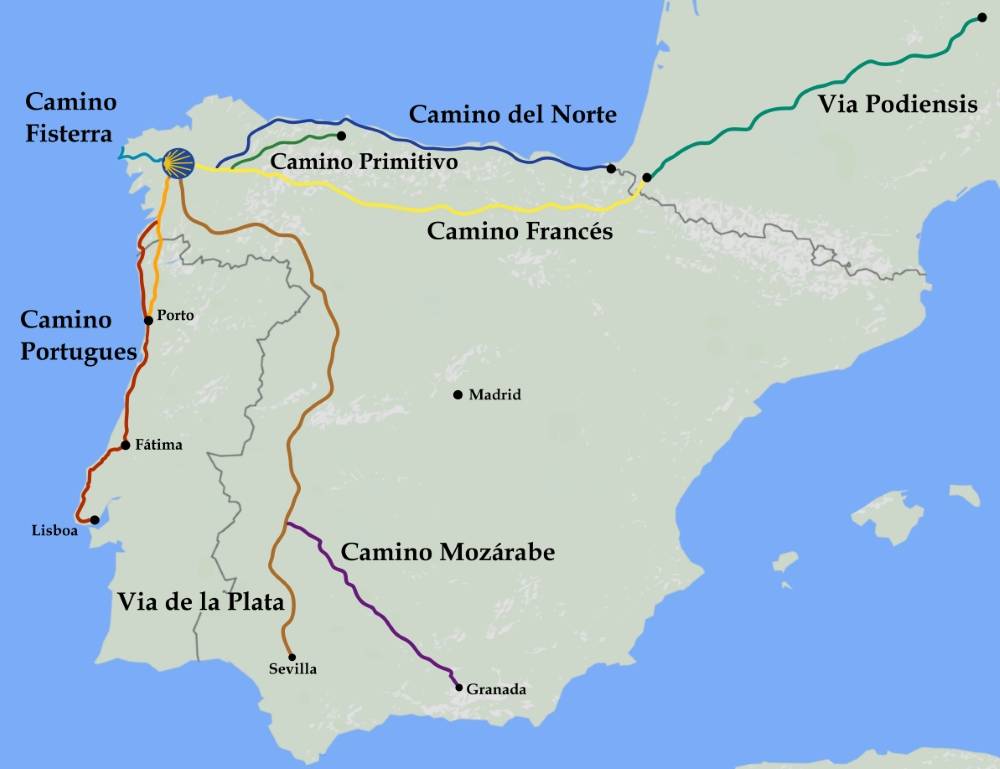
People from all over Europe have been making pilgrimages to Santiago de Compostela for over 1000 years. This has given rise to well-known main routes, i.e. various "Caminos". The Camino Portugues, for example, leads from Portugal to Santiago. However, the famous Camino Francés takes its name from the fact that this main pilgrimage route begins in France and pilgrims in Spain were often referred to collectively as francs (francos).
In Germany, we usually refer to the traditional Camino Francés as the "Way of St. James". It was made famous above all by Hape Kerkeling's book "Ich bin dann mal weg" (I'm off then). However, there are many paths that lead through Europe to the tomb of St. James the Apostle and therefore also different ways of St. James. In Spanish, the Way is called "Camino" and St. James "Santiago". Today, the Way of St. James is also known internationally under its Spanish name "Camino de Santiago".
A brief history of the Camino de Santiago
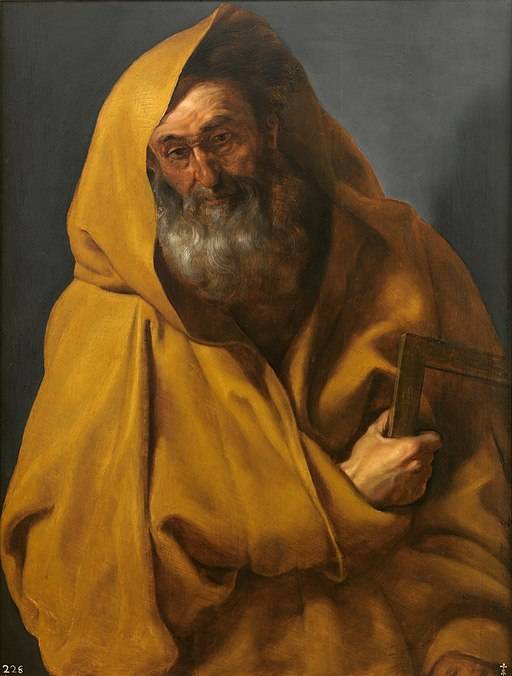
St. James the Elder, Rubens
The historic Camino de Santiago has always shaped the culture, population and architecture of the various regions. The apostle James the Elder, one of the twelve disciples of Jesus and brother of the apostle John, is at the center of the eventful history of the Camino de Santiago.
It has been claimed since the 7th century that James was a missionary in Spain after Jesus' death. After James returned to Jerusalem from Spain, he was beheaded there by King Solomon and died as a martyr, according to the Acts of the Apostles. There are many legends surrounding the question of how James' remains ended up in Spain. One says that his entourage carried him to Santiago and buried him there. Another says that the remains of St. James were transported by a ship made of stone without a pilot, which docked in the city of Padrón.
The remains were allegedly found in 814 by the hermit Pelagius, who saw a light shining from his cave in the nearby forest at night. He approached and found the skeleton of a man. He first called the bishop Theodemir, who opened the grave and, after fasting and praying, identified the bones as those of St. James. The discovery was then officially announced by King Alfonso II of Asturias.
When the skeleton of St. James the Apostle was found in Galicia, the various kingdoms of Spain were in a state of deep political crisis. The land, populated mainly by Iberian and Celtic tribes, was repeatedly visited by Greeks, Romans, Phoenicians and Carthaginians. In the 8th century, however, a Muslim army invaded the Iberian Peninsula from North Africa. The army consisted largely of North African Moors who had been proselytized to Islam by the Arabs and conquered large parts of the Spanish empire in a very short time.
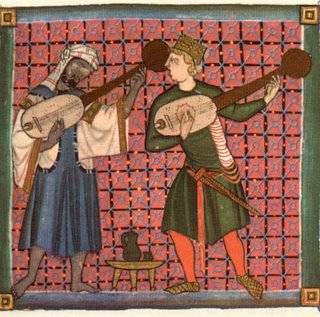
Moorish and Christian minstrels
The discovery of the bones of St. James the Apostle was also politically opportune. It offered the opportunity to appeal to the Christian identity of the other Spanish kingdoms and unite them in a common stance against the Muslim Moors. Historians assume that the cult of St. James played a not insignificant role in the Reconquista - the reconquest of the large territories in southern Spain that were held by Muslims. As a result, St. James was also repeatedly appropriated for military service. While he was initially portrayed as a typical pilgrim, depictions of St. James with a raised sword on horseback soon became more frequent and Spanish armies often went to war against the Moors in southern Spain under his **protection**.
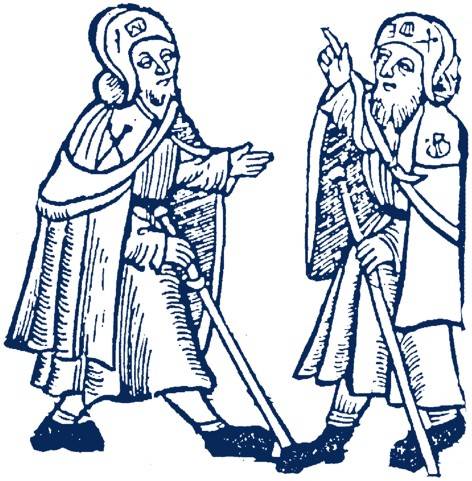
Medieval pilgrims
The cult of St. James quickly set off the first pilgrimages to the apostle's tomb. The first pilgrim was allegedly King Alfonso II himself, who made the pilgrimage to Santiago via today's Camino Primitivo. The Way of St. James then gained European importance in the 11th century and the Camino Frances emerged as a major pilgrimage route. A relative economic upturn and political calm allowed the European pilgrimage movement to flourish. Rome and Jerusalem were also far away as important pilgrimage sites and a journey there was comparatively more dangerous. It is estimated that in the medieval heyday, up to 1,000 pilgrims approached the tomb of St. James every day, numbers comparable to those of today and possibly even exceeding them. The streams of pilgrims had a lasting impact on northern Spain and many traces of the medieval pilgrimage period can still be found today.
The Way of St. James was also of economic interest to the rulers of northern Spain. The pilgrims not only brought money with them, they also spread new ideas, information, artistic trends, architectural knowledge and gossip. As early as the Middle Ages, the Camino de Santiago served as a place of cultural understanding between the empires of Europe. Many Europeans settled along the Way of St. James and the Franks in particular left their mark on many towns, as they had a mastery of architecture that was superior to that of the Spanish. This is how the Way of St. James got its name Camino Frances, **French Way**.
Especially in the Holy Years, which are celebrated when the feast day of St. James, July 25, falls on a Sunday, large crowds of people came to Santiago de Compostela. There may also have been a pragmatic reason for this: the Holy Years were also years of grace in which pilgrims were forgiven all debts. Nevertheless, it is assumed that the Way of St. James did not only attract religious pilgrims. Adventurers and vagabonds probably roamed the route, as did thieves and swindlers. The enormous number of travelers reinforced a Christian-European identity and facilitated a lively cultural exchange.